47-Year-Old Voyager 1 Spacecraft Just Fired Up Thrusters It Hasn’t Used in Decades
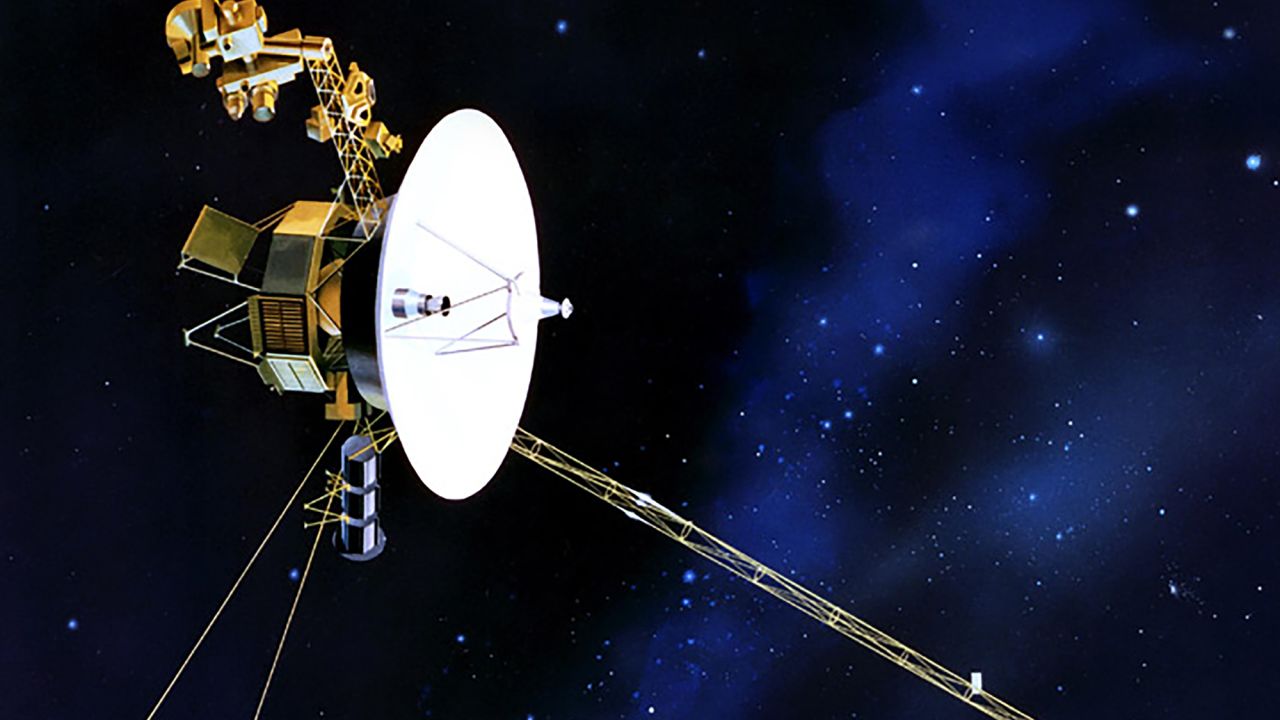
The Voyager 1 spacecraft, launched in 1977, continues to astonish scientists and engineers more than four decades after its journey began. On a mission originally intended to explore the outer planets, Voyager 1 has ventured farther from Earth than any human-made object, hurtling through interstellar space, over 14 billion miles away. In a stunning demonstration of its resilience, NASA recently activated thrusters on Voyager 1 that had not been used for 37 years—an extraordinary feat for the 47-year-old spacecraft.
The Problem: Degrading Thrusters
Voyager 1, which carries a wealth of scientific data from its passage through the outer solar system, has been communicating with Earth using its antenna. To maintain this critical communication link, the spacecraft relies on small thrusters that periodically fire to adjust its orientation. However, in recent years, NASA noticed that the thrusters Voyager 1 had been using, called “attitude control thrusters,” were degrading. Their performance had become unreliable, risking a potential loss of communication with the aging spacecraft.
With the spacecraft far beyond the reach of any repair mission, NASA’s engineers faced a dilemma: how to continue controlling Voyager 1’s orientation without relying on its failing thrusters.
The Unlikely Solution: Firing Dormant Thrusters
NASA’s team found a solution in a surprising place—four backup thrusters that hadn’t been used since Voyager 1’s encounter with Saturn in 1980. These “trajectory correction maneuver” (TCM) thrusters were originally designed to help steer the spacecraft during planetary flybys, but had been dormant for decades, never intended to be used for this purpose so late in the mission.
After carefully reviewing data and running simulations, NASA engineers decided to attempt firing these ancient thrusters, hoping they would be capable of making the necessary adjustments to Voyager 1’s orientation. The team sent the command to the spacecraft, which takes over 19 hours to travel from Earth to Voyager 1 due to the vast distance.
Success: A Testament to Engineering
Against the odds, the TCM thrusters fired perfectly, performing as though no time had passed since their last use nearly 40 years ago. This success allows NASA to extend Voyager 1’s mission by a few more years, as the spacecraft can now use these backup thrusters to maintain its orientation and continue communicating with Earth.
Suzanne Dodd, project manager for Voyager at NASA’s Jet Propulsion Laboratory, expressed her amazement at the spacecraft’s durability: “With these thrusters that are still functional after 37 years without use, we are able to extend the life of Voyager 1 for another two to three years, providing valuable data from interstellar space.”
Voyager 1: A Journey Through Time and Space
Voyager 1’s mission has been nothing short of groundbreaking. After its launch in 1977, the spacecraft completed a grand tour of the outer planets, flying by Jupiter in 1979 and Saturn in 1980, capturing stunning images and revolutionizing our understanding of the gas giants and their moons. It then embarked on a new mission—traveling beyond the heliosphere, the protective bubble of particles and magnetic fields created by the Sun.
In 2012, Voyager 1 made history once again by becoming the first human-made object to enter interstellar space. Since then, it has been sending back invaluable data about the environment outside the influence of the Sun, providing scientists with a rare glimpse of interstellar space.
What’s Next for Voyager 1?
While the successful use of the backup thrusters gives Voyager 1 a new lease on life, its mission will eventually come to an end. The spacecraft relies on radioisotope thermoelectric generators (RTGs) for power, and these are gradually producing less energy as their radioactive fuel decays. By 2025, it’s expected that Voyager 1 will no longer have enough power to operate its scientific instruments.
However, even after its instruments are shut down, Voyager 1 will continue its silent journey through the stars, carrying the famous Golden Record—a time capsule of sounds, images, and messages from Earth, intended for any extraterrestrial civilizations that may one day encounter the spacecraft.
A Legacy That Endures
Voyager 1’s journey into the unknown is one of humanity’s greatest achievements in space exploration. Its ability to fire up thrusters after nearly four decades of inactivity is a testament to the craftsmanship and ingenuity of the engineers who designed it.
The spacecraft’s continued operation allows us to peer farther into space than ever before, and its data from interstellar space could provide insights for generations to come. As Voyager 1 drifts ever farther from our solar system, it serves as a reminder of our enduring curiosity and our desire to explore the vast cosmos. Even in its twilight years, Voyager 1 continues to push the boundaries of what is possible in space exploration.