Kayaköy: Exploring Turkey’s Hauntingly Beautiful Ghost Town
Kayaköy: Exploring Turkey’s Hauntingly Beautiful Ghost Town
Tucked away in the hills of southwestern Turkey, near the popular tourist destination of Fethiye, lies Kayaköy, a ghost town that stands as a silent witness to a tumultuous past. Once a bustling Greek community, Kayaköy now sits in eerie abandonment, its stone houses, churches, and narrow streets echoing with history. This hauntingly beautiful site offers a unique glimpse into the region’s complex past and serves as a poignant reminder of the cultural shifts that have shaped modern Turkey.
The Rise and Fall of Kayaköy
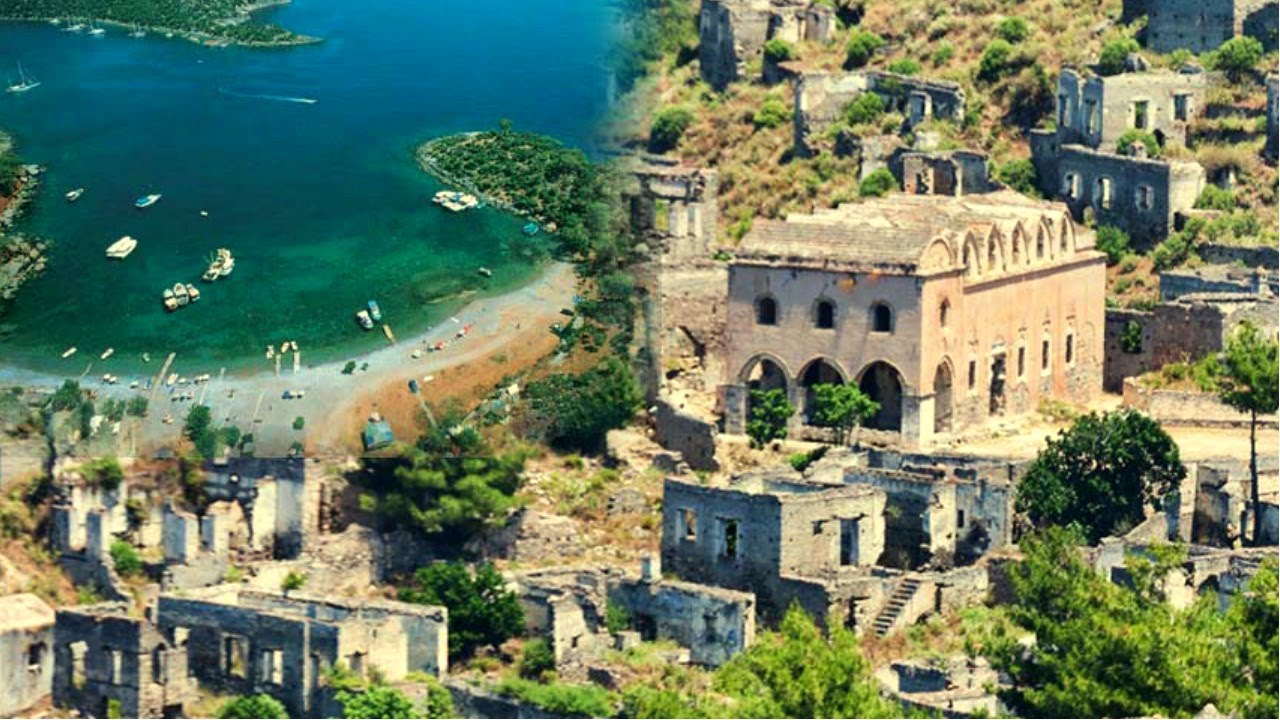
Kayaköy, originally known as Levissi, was a thriving village inhabited by Greek Orthodox Christians for centuries. The town was home to around 6,500 people, and its population lived in harmony with nearby Turkish Muslim communities. Built on the slopes of a hill, Kayaköy’s architecture is a testament to the traditional Greek style, with stone houses painted in pastel hues, arched doorways, and red-tiled roofs. The village also boasted several churches, schools, and shops, making it a lively and prosperous community.
However, the peaceful coexistence in Kayaköy was shattered in the early 20th century by the events of World War I and the subsequent Greco-Turkish War. In 1923, as part of the Treaty of Lausanne, a population exchange was mandated between Greece and Turkey, requiring the Greek Orthodox residents of Kayaköy to leave their homes and resettle in Greece. In return, Muslim Turks from Greece were relocated to Turkey, including Kayaköy. But the incoming Turkish population, unfamiliar with the Greek-style stone houses and the agricultural methods suited to the area, largely abandoned the village. As a result, Kayaköy was left deserted, gradually falling into decay.
A Living Monument
Today, Kayaköy is preserved as a historical monument and open-air museum, allowing visitors to walk through its deserted streets and explore its crumbling buildings. The town’s eerie atmosphere, combined with its picturesque setting, makes it a fascinating destination for those interested in history, architecture, and cultural heritage.
One of the most striking features of Kayaköy is its churches. The two most prominent are the Upper Church (Basilica of Panagia Pyrgiotissa) and the Lower Church (Basilica of Taxiarchis). Although both churches have suffered from neglect and looting over the years, their imposing facades and the remnants of frescoes inside offer a glimpse into the spiritual life of the village. The churches, with their commanding views over the valley below, are among the most photographed sites in Kayaköy.
The houses of Kayaköy, now roofless and overgrown with vegetation, still retain their original layouts, with rooms arranged around central courtyards. Wandering through these homes, visitors can imagine the daily lives of the villagers who once lived there—cooking meals, tending to their gardens, and gathering in the streets for conversation.
Kayaköy in Modern Culture
Kayaköy’s haunting beauty has not gone unnoticed by the world beyond Turkey. The ghost town has inspired artists, writers, and filmmakers, drawn by its atmosphere of melancholy and the stories of displacement that it represents. One of the most notable works is Louis de Bernières’ novel Birds Without Wings, which is set in a fictionalized version of Kayaköy and explores the impact of the population exchange on a small Anatolian village.
In recent years, Kayaköy has also gained attention as a film location. The town’s evocative ruins have been featured in several movies, most notably in Russell Crowe’s directorial debut, The Water Diviner (2014), which used Kayaköy as a backdrop for scenes set during and after World War I.
Visiting Kayaköy
Kayaköy is easily accessible from Fethiye, a popular resort town on Turkey’s Turquoise Coast. A short drive or a scenic hike through the surrounding countryside will bring visitors to the ghost town, where they can spend hours exploring its ruins. The site is open to the public, and a small entrance fee is charged to help with preservation efforts.
For those interested in a deeper understanding of Kayaköy’s history, guided tours are available, offering insights into the village’s past and the broader historical context of the population exchange. Visitors can also visit the small museum on-site, which displays artifacts and photographs from Kayaköy’s heyday.
The surrounding area offers plenty of opportunities for outdoor activities, including hiking, horseback riding, and paragliding. After exploring Kayaköy, visitors can relax at one of the nearby cafes or restaurants, many of which offer stunning views of the ghost town and the surrounding hills.
Preserving the Past
Kayaköy stands as a powerful symbol of the cultural and historical upheavals that have shaped Turkey’s modern identity. Efforts are ongoing to preserve the site and to ensure that the stories of its former inhabitants are not forgotten. In 2014, the Turkish government, recognizing the historical significance of Kayaköy, proposed restoring parts of the town and opening it up to more tourism. However, these plans have been met with mixed reactions, as many believe that the town’s current state of decay is integral to its haunting appeal.
For now, Kayaköy remains a place of reflection—a silent village where the echoes of the past linger in the air. Whether you are a history enthusiast, an architecture lover, or simply a traveler in search of something different, Kayaköy offers a unique and moving experience. Walking through its deserted streets, you can’t help but feel the weight of history and the passage of time, as this once-vibrant community slowly returns to the earth.