SpaceX’s Falcon 9 Rocket Cleared for Flight with Two High-Profile Missions Ahead
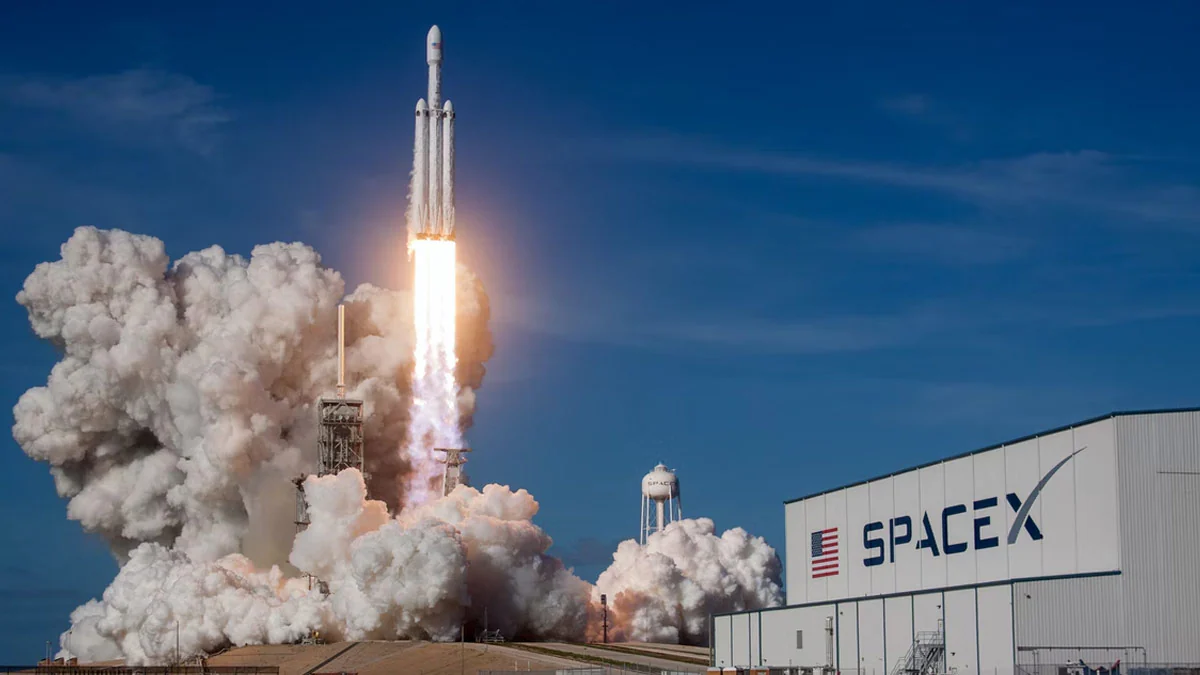
SpaceX’s Falcon 9 Rocket Cleared for Flight with Two High-Profile Missions Ahead
SpaceX’s Falcon 9 rocket, known for its reliability and reusability, has been cleared for flight once again, setting the stage for two high-profile missions that will showcase the company’s continued leadership in the space industry. The approval follows a rigorous series of inspections and tests, ensuring that the rocket is ready to meet the demanding challenges of its upcoming launches. As SpaceX gears up for these significant missions, the Falcon 9’s readiness underscores the company’s pivotal role in advancing space exploration and commercial spaceflight.
The Falcon 9: A Proven Workhorse
The Falcon 9 rocket has become a cornerstone of SpaceX’s operations, renowned for its reusability and cost-effectiveness. Since its debut in 2010, Falcon 9 has completed over 200 successful launches, delivering satellites into orbit, supplying the International Space Station (ISS), and even ferrying astronauts as part of NASA’s Commercial Crew Program.
A key feature of the Falcon 9 is its first stage, which is designed to be recovered and reused. This capability has revolutionized the economics of spaceflight, significantly reducing the cost of launching payloads into space. The rocket’s reliability and performance have made it the go-to vehicle for a wide range of missions, from government contracts to commercial satellite deployments.
Upcoming Missions: A Dual Focus on Innovation and Exploration
The two high-profile missions ahead for the Falcon 9 highlight SpaceX’s dual focus on innovation and exploration. The first mission involves the deployment of a new batch of Starlink satellites, a crucial step in expanding SpaceX’s ambitious global internet coverage network. The second mission, slated to take place shortly after, will launch the highly anticipated NASA Europa Clipper spacecraft, a mission that could unlock secrets about one of Jupiter’s most intriguing moons.
Starlink: Expanding Global Connectivity
The Starlink mission is part of SpaceX’s ongoing effort to build a constellation of low Earth orbit (LEO) satellites that provide high-speed internet access across the globe, particularly in remote and underserved regions. To date, SpaceX has launched over 4,000 Starlink satellites, with plans to deploy thousands more in the coming years.
This next batch of Starlink satellites represents a new generation, equipped with advanced capabilities such as improved bandwidth, lower latency, and enhanced coverage. The success of this mission is critical for SpaceX as it continues to scale its Starlink service, which has already attracted over 2 million subscribers worldwide.
The rapid deployment of the Starlink constellation is not only a technical achievement but also a potential game-changer in the global telecommunications market. By providing reliable, high-speed internet to remote areas, SpaceX aims to bridge the digital divide and offer a viable alternative to traditional internet service providers.
Europa Clipper: Unveiling the Mysteries of a Distant Moon
Following the Starlink mission, Falcon 9 will be tasked with launching NASA’s Europa Clipper spacecraft, a mission that represents a major leap forward in the exploration of our solar system. Scheduled to arrive at Jupiter’s moon Europa in the early 2030s, the Europa Clipper will conduct detailed reconnaissance of the icy moon, which is believed to harbor a subsurface ocean beneath its frozen crust.
Europa has long been considered one of the most promising locations in the search for extraterrestrial life, and the Europa Clipper mission is designed to gather crucial data that could help answer some of the most profound questions about the potential for life beyond Earth.
The spacecraft will carry a suite of scientific instruments designed to study the moon’s ice shell, surface composition, and subsurface ocean. These instruments will provide high-resolution images and other data that could reveal the geological activity on Europa, including the presence of water plumes that might erupt from its subsurface ocean.
Launching the Europa Clipper is a significant milestone for SpaceX, demonstrating its capability to support complex interplanetary missions. The success of this mission could also pave the way for future collaborations between SpaceX and NASA, as both entities continue to push the boundaries of space exploration.
Ensuring Mission Success: Pre-Launch Preparations
In preparation for these missions, SpaceX conducted thorough inspections and tests of the Falcon 9 rocket, focusing on the integrity of its engines, fuel systems, and flight control mechanisms. The clearance to fly again indicates that the rocket has passed all necessary safety checks and is in optimal condition for the demanding launches ahead.
The meticulous pre-launch preparations reflect SpaceX’s commitment to mission success, a core value that has driven the company’s impressive track record. With each successful launch, SpaceX continues to build confidence in the reliability of its rockets, reinforcing its position as a leader in the commercial space industry.
Looking Ahead: SpaceX’s Vision for the Future
As SpaceX prepares to launch these two high-profile missions, the company’s broader vision for the future of space exploration comes into focus. From revolutionizing global internet connectivity with Starlink to supporting groundbreaking scientific missions like Europa Clipper, SpaceX is at the forefront of efforts to make space more accessible and to expand humanity’s reach into the cosmos.
The success of these upcoming missions will not only reinforce SpaceX’s reputation but also advance its ambitious goals, including the eventual colonization of Mars. As the Falcon 9 rocket prepares to take flight once more, it is clear that SpaceX is poised to continue shaping the future of space travel and exploration, one mission at a time.