Boeing Factory Workers to Rally in Seattle as Strike Enters Second Month
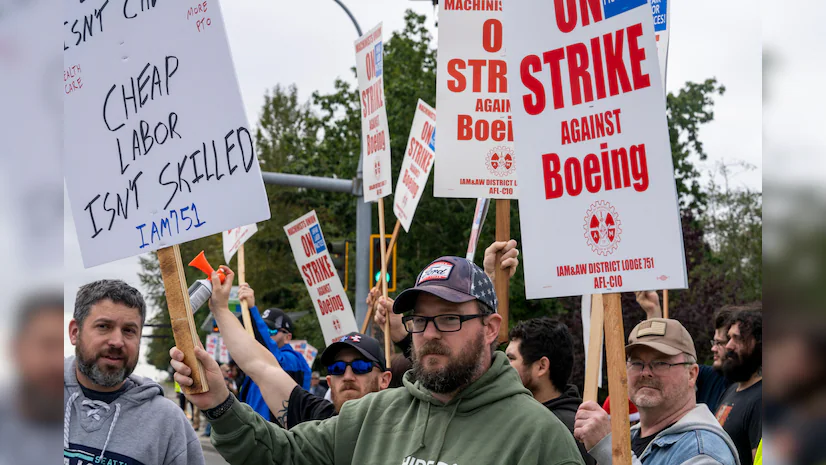
Boeing factory workers are set to rally in Seattle as their strike, now entering its second month, continues to affect production at one of the world’s largest aerospace manufacturers. The ongoing labor action, led by members of the International Association of Machinists and Aerospace Workers (IAM), centers around disputes over wages, benefits, and job security.
Thousands of workers at Boeing’s factories, particularly at its Everett and Renton production plants, have been on strike since early September, bringing to a halt the assembly of several key aircraft models, including the 737 MAX and 777X. The strike has raised concerns over supply chain delays and production timelines for Boeing’s commercial and defense aircraft.
The Core Issues Behind the Strike
The workers are demanding better wages and more comprehensive healthcare benefits, as well as stronger protections for pensions. Union leaders have pointed out that while Boeing has rebounded financially from the challenges posed by the COVID-19 pandemic and continues to secure large contracts from both commercial airlines and military clients, workers are not seeing their fair share of these gains.
IAM District Lodge 751, which represents the striking workers, has also raised concerns about Boeing’s reliance on temporary contracts and the outsourcing of jobs to non-unionized workers. These issues have exacerbated fears of long-term job insecurity among employees.
“These workers are the backbone of Boeing, responsible for building some of the most advanced aircraft in the world. They deserve to be treated with respect and to receive compensation that reflects their vital contributions,” said Jon Holden, president of IAM District 751, in a recent statement.
Boeing’s Position
Boeing, meanwhile, has expressed disappointment over the continuation of the strike but maintains that it has offered a “fair and competitive” contract proposal. In a statement, the company emphasized that it values its employees and is committed to reaching an agreement that benefits both the workers and the company.
“Boeing has made a strong offer, including wage increases and improved benefits that reflect our commitment to supporting our workforce,” said a Boeing spokesperson. “We urge the union to return to the negotiating table to reach a resolution that allows our workers to return and continue building the world-class products Boeing is known for.”
However, union leaders have rejected Boeing’s offer, arguing that it falls short of addressing key issues like rising healthcare costs and the lack of job security due to outsourcing.
Impact on Production and the Broader Economy
The strike has had a significant impact on Boeing’s production schedules. The Everett plant, where the company assembles wide-body jets like the 777 and 787 Dreamliner, has experienced delays, while Renton, home to the 737 MAX production line, has also seen slowdowns.
These production delays could have ripple effects throughout the aviation industry, with airlines awaiting deliveries potentially facing disruptions in fleet expansions and upgrades. The strike also comes at a time when Boeing is under pressure to meet delivery targets, particularly for the 737 MAX, as global air travel recovers from the pandemic.
In addition to its effect on production, the strike is impacting the regional economy. Boeing is one of the largest employers in Washington state, and the company’s operations have long been a pillar of the local economy. The longer the strike continues, the more likely it is to affect Boeing’s suppliers and contractors, potentially causing a broader slowdown in the aerospace sector.
Rally in Seattle: A Show of Unity
As the strike enters its second month, union leaders have organized a major rally in Seattle to show solidarity among workers and call attention to their demands. Thousands of Boeing employees, along with their families and supporters from other labor unions, are expected to attend the rally, which is set to take place at the Westlake Park in downtown Seattle.
The rally is intended not only to maintain morale among striking workers but also to put pressure on Boeing to return to negotiations with a better offer. Labor leaders are hoping the public demonstration will bring more attention to their cause and gain additional support from the community.
“We’re not backing down until we get a fair deal,” said one Boeing worker involved in the strike. “Boeing is making huge profits, and all we’re asking for is a contract that ensures we can support our families and secure our future.”
Broader Labor Movement Context
The Boeing strike is part of a broader wave of labor unrest across the United States in recent years, as workers in industries from manufacturing to retail have pushed for higher wages, better working conditions, and greater job security. The strike echoes similar labor actions, including the high-profile strikes by the United Auto Workers (UAW) against General Motors, Ford, and Stellantis, and various strikes across the service and healthcare sectors.
The IAM has garnered support from other unions and labor organizations nationwide, as workers in various industries continue to fight for improved labor conditions amid inflation and growing corporate profits.
Looking Ahead: Can an Agreement Be Reached?
As the Boeing strike continues, the focus remains on the potential for renewed negotiations. While both sides have expressed a willingness to return to the bargaining table, significant gaps remain in their positions. The union is standing firm on its demands for better healthcare and wage increases that keep pace with inflation, while Boeing insists that its offer already addresses these concerns.
For now, the strike shows no signs of ending soon, and Boeing may face growing pressure from customers and stakeholders to resolve the dispute. Both the company and the union understand that the stakes are high—not just for the future of Boeing’s production, but for the thousands of workers whose livelihoods depend on the outcome of these negotiations.
As Boeing workers rally in Seattle, their message is clear: they are determined to continue their fight for fair treatment and a contract that ensures their long-term security, even if it means keeping the picket lines up for weeks to come.