Cave Discovery in France May Explain Why Neanderthals Disappeared
Cave Discovery in France May Explain Why Neanderthals Disappeared
A fascinating new discovery in France may shed light on one of the longest-standing mysteries in human evolution: the disappearance of the Neanderthals. Despite coexisting with modern humans for thousands of years, Neanderthals vanished roughly 40,000 years ago, leaving behind little more than bones, tools, and enigmatic clues about their lives. Recent excavations in a cave in the Rhône region of southeastern France have unearthed evidence that could provide new insights into this mystery.
The Discovery
The cave, located near the town of Montélimar, contains an array of Neanderthal artifacts, including tools, animal bones, and evidence of fire use. But the most groundbreaking discovery is a series of skeletal remains that appear to indicate a sudden and violent end for the Neanderthals living in the area. These findings have sparked renewed interest in the theory that environmental pressures, competition with Homo sapiens, or even direct conflict could have played a role in their extinction.
What Was Found?
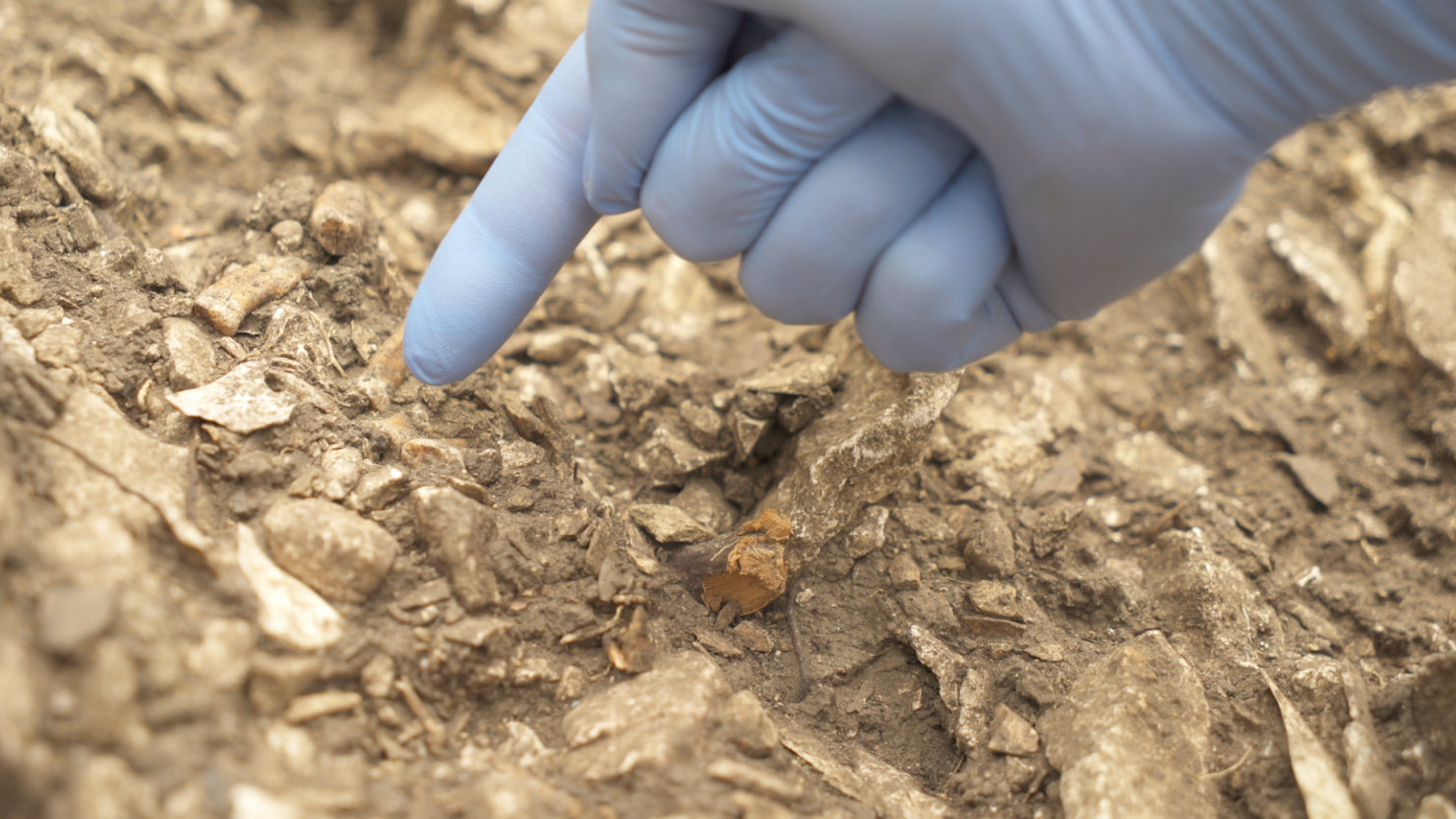
Archaeologists uncovered a well-preserved set of remains that showed signs of trauma, including fractures and possible cut marks. This suggests that the Neanderthals may have faced violent interactions, possibly with early modern humans or rival Neanderthal groups. In addition to the human remains, large quantities of animal bones, some showing evidence of butchering, were found, indicating that this was an active hunting and living site.
Further analysis of sediment layers around the site revealed significant environmental changes during the period when the Neanderthals vanished. Cold and dry conditions during this time would have dramatically altered the local ecosystem, making it harder for Neanderthals to find food and resources.
The Competition Hypothesis
One of the leading theories for the disappearance of Neanderthals has long been competition with early modern humans. Homo sapiens, who arrived in Europe around 45,000 years ago, were more adaptable and used more advanced tools. The new discovery in France may support the idea that competition for resources could have been a key factor. Evidence of overlapping human and Neanderthal occupation layers suggests the two species lived side by side—likely competing for food, territory, and resources.
The remains found in the cave show that both species were hunting large game, but it’s possible that modern humans were more efficient hunters or better at coping with the changing environment. This increased pressure on the Neanderthals could have led to their decline.
Climate Change and Adaptability
Environmental shifts during the time of the Neanderthals’ disappearance could have also played a crucial role. The discovery of pollen samples and plant fossils from the cave site indicates that the region was experiencing significant climate fluctuations. A sudden drop in temperature may have reduced available food sources, such as game animals and plant life, pushing Neanderthals into an ecological crisis. While modern humans may have been better suited to survive these changes due to their wider range of tools and social structures, Neanderthals may have struggled to adapt quickly enough.
The French cave also provides clues that Neanderthals were trying to adjust to these changing conditions. Evidence of new tool designs suggests they were innovating, but these changes may have come too late to prevent their decline. With dwindling resources and harsher climates, Neanderthals may have been pushed to the brink of extinction.
The Interbreeding Factor
Another layer of complexity in the disappearance of Neanderthals is interbreeding with Homo sapiens. Genetic evidence has shown that Neanderthals and modern humans interbred, with most non-African humans today carrying between 1-2% Neanderthal DNA. The discovery of mixed remains or artifacts associated with both groups in this French cave could offer more insight into the relationship between the two species.
Some scientists suggest that rather than completely disappearing, Neanderthals may have been absorbed into the modern human population through interbreeding. This theory posits that small, isolated Neanderthal populations gradually merged with Homo sapiens, effectively ending the Neanderthals as a distinct species.
New Questions, New Theories
While the cave discovery in France has provided crucial new evidence, it has also raised fresh questions. Why did the Neanderthals fail to thrive despite showing signs of adaptability? Was their extinction driven more by direct competition with modern humans or environmental pressures beyond their control? Or could it have been a combination of both, alongside other factors like disease or interbreeding?
The findings point to a period of intense stress for Neanderthals in their final years, whether through violent conflict, climate challenges, or dwindling resources. The evidence of trauma on the Neanderthal skeletons suggests that human-Neanderthal interactions may not have always been peaceful, supporting the idea that direct competition or conflict could have been a major factor.
Conclusion
The discovery of the cave in France represents an important step toward understanding why Neanderthals disappeared. As researchers continue to analyze the remains and artifacts found at the site, they may uncover more information about the interaction between Neanderthals and modern humans, as well as the environmental challenges both species faced. While many mysteries remain, this finding strengthens the idea that a combination of competition, climate change, and possibly interbreeding could have led to the decline and eventual disappearance of Neanderthals.
This cave could hold the key to unraveling one of prehistory’s most intriguing puzzles—how Neanderthals, once a thriving species, faded from existence, leaving modern humans as the last surviving hominin species on Earth.