Nobel Prize in Physics Awarded to John Hopfield and Geoffrey Hinton for Groundbreaking Work on Artificial Intelligence
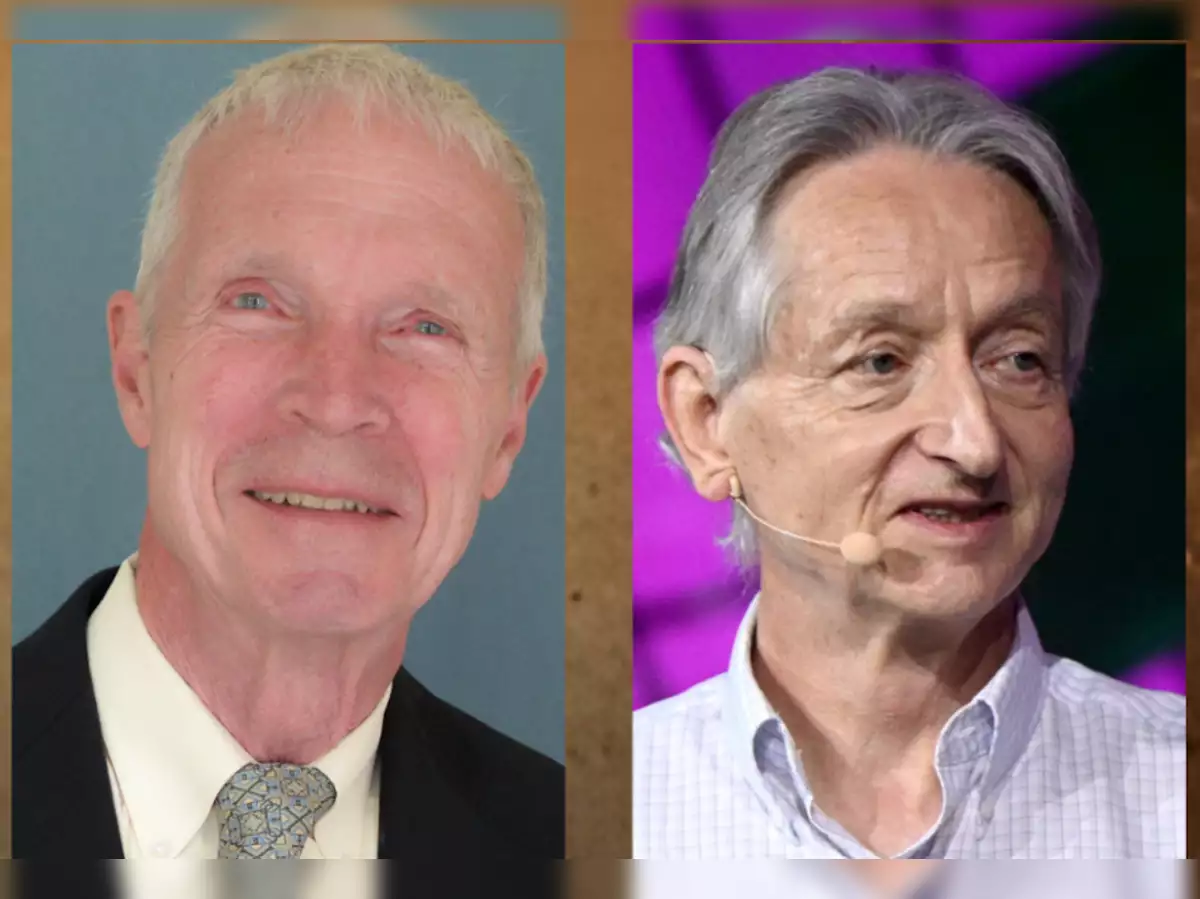
In a historic announcement, the Nobel Prize in Physics has been awarded to John Hopfield and Geoffrey Hinton for their pioneering contributions to the development of artificial intelligence (AI), particularly in the field of neural networks. Their work has revolutionized both the theoretical understanding and practical applications of AI, laying the foundation for the modern deep learning revolution that is transforming industries, science, and everyday life.
The Nobel Committee’s decision to honor Hopfield and Hinton for their work on AI marks a significant recognition of the increasing intersection between physics, computer science, and cognitive science. While traditionally awarded for breakthroughs in fundamental physics, the committee emphasized that the theoretical framework behind AI has deep roots in physics, particularly in the understanding of complex systems and energy landscapes.
John Hopfield’s Contribution: Hopfield Networks
John Hopfield, a theoretical physicist, is best known for the development of the Hopfield network in the 1980s, a type of recurrent neural network that models associative memory. His work on neural networks was groundbreaking in linking concepts from physics, particularly statistical mechanics, to the functioning of the brain and cognitive processes.
Hopfield’s model was inspired by the Ising model in statistical mechanics and helped provide a theoretical framework for how neural networks could store and retrieve information, much like the human brain. His network, often described as a form of “content-addressable memory,” demonstrated how a system could retrieve an entire memory or pattern based on incomplete or noisy input.
By applying ideas from energy minimization and stability in physics to neural computation, Hopfield helped create a bridge between disciplines. His work has since been applied to various fields, including cognitive neuroscience, machine learning, and computational biology. The Hopfield network remains one of the key models in the study of neural networks and memory, and it inspired a generation of researchers to explore the physics of computation.
Geoffrey Hinton’s Contribution: Deep Learning and Backpropagation
Geoffrey Hinton, a cognitive psychologist and computer scientist, has been a central figure in the development of deep learning, a subset of AI that focuses on the use of multi-layered neural networks to process vast amounts of data. Hinton’s work has been particularly influential in advancing the understanding and application of backpropagation, a key algorithm that enables neural networks to learn from data by adjusting the weights of connections between neurons.
Hinton’s belief in the power of neural networks, even when many researchers had abandoned the approach in favor of symbolic AI, was instrumental in the revival of interest in deep learning in the early 2000s. His development of deep neural networks, particularly through his work on restricted Boltzmann machines and autoencoders, paved the way for modern AI applications, including image recognition, natural language processing, and autonomous systems.
Hinton’s contributions to AI are not only theoretical but also practical. In 2012, his research group at the University of Toronto developed AlexNet, a deep convolutional neural network that won the ImageNet competition, a major milestone that demonstrated the power of deep learning in image classification. This victory sparked widespread interest and investment in neural networks, which have since become the dominant method for AI tasks across industries, from healthcare to autonomous vehicles.
The Physics-AI Connection
The decision to award the Nobel Prize in Physics for AI research reflects the interdisciplinary nature of modern science, where breakthroughs often occur at the intersection of different fields. Hopfield’s work drew heavily from physics, particularly statistical mechanics, while Hinton’s research, although rooted in computer science, has relied on mathematical principles that are central to theoretical physics.
The Nobel Committee highlighted the deep connections between physical systems and neural networks. Both Hopfield and Hinton’s work involves the study of complex, dynamic systems where interactions between many elements lead to emergent behavior—a core concept in both physics and AI. In neural networks, the interactions between artificial neurons result in the ability to recognize patterns, make decisions, and generalize from data, mirroring how physical systems evolve and reach equilibrium.
Impact on AI and Society
The contributions of Hopfield and Hinton have had a profound impact on the development of AI, which is now an integral part of many technologies. AI systems, powered by neural networks and deep learning, are behind the latest advancements in fields such as autonomous driving, medical diagnostics, natural language understanding, and climate modeling.
In healthcare, AI algorithms are being used to detect diseases like cancer from medical images, while in finance, AI helps in fraud detection and market prediction. Meanwhile, in daily life, AI-powered virtual assistants, recommendation systems, and speech recognition have become commonplace. These technologies would not be possible without the foundational work of figures like Hopfield and Hinton.
Despite the incredible advancements, the rapid rise of AI also brings ethical and societal challenges, including concerns about job displacement, privacy, and the potential for AI systems to reinforce biases. As the field continues to evolve, the work of Hopfield and Hinton will remain central to ongoing debates about the future of AI and its role in shaping the world.
Conclusion
The awarding of the Nobel Prize in Physics to John Hopfield and Geoffrey Hinton is a landmark recognition of the transformative impact their work has had on both the scientific community and society at large. Their pioneering contributions to neural networks and deep learning have not only advanced our understanding of intelligence—both artificial and biological—but have also created the technological foundation for the AI-driven world we live in today.
As AI continues to reshape industries and scientific research, the work of these two Nobel laureates will remain a guiding light for future innovations, marking the intersection of physics, computer science, and the quest to understand the nature of intelligence itself.