Tech Tsunami: Are You Ready to Be Swept Away?
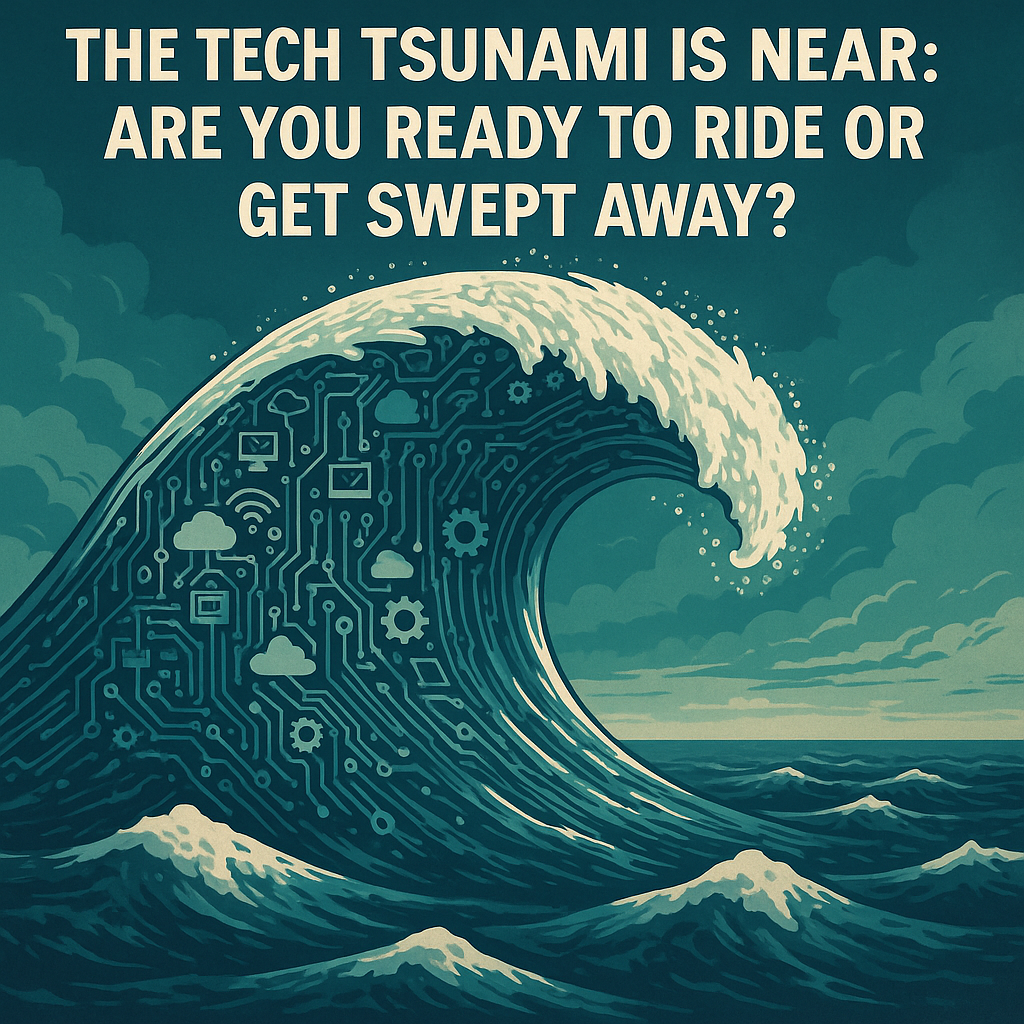
Tech Tsunami: Are You Ready to Be Swept Away?
Introduction
Imagine standing on a seemingly stable shore, the waves gently lapping at your feet. Then, in the distance, you see it – a massive surge of water, building momentum with each passing second. That, in essence, is the tech landscape right now. A tidal wave of innovation is crashing onto our lives, our jobs, and our futures. Are you ready to ride the wave, or will you be swept away?
This isn’t some sci-fi movie scenario. We’re talking about the rapid advancements in artificial intelligence (AI), automation, the Internet of Things (IoT), and biotechnology, all converging to reshape the world as we know it. The speed is dizzying, and the implications are profound. While these technologies offer incredible opportunities, they also present significant challenges that we need to address head-on.
The Short-Term Impact: A Shifting Landscape
Let’s be real, the tech tsunami is already making waves. In the short term, we’re seeing this play out in a few key areas:
- Job Displacement: Automation is rapidly changing the employment landscape. Tasks previously performed by humans are now being handled by machines and AI-powered systems. This isn’t just about factory workers anymore. Customer service representatives, data entry clerks, even some roles in law and accounting are being affected.
- Skill Gap: New technologies demand new skills. The current education system often struggles to keep pace, leaving many workers unprepared for the jobs of the future. This creates a widening skill gap, leaving individuals and businesses scrambling to adapt.
- Ethical Concerns: The rise of AI and data analytics raises serious ethical questions about bias, privacy, and accountability. Algorithms can perpetuate existing biases, leading to unfair or discriminatory outcomes. The constant collection and analysis of personal data raise concerns about surveillance and control.
For instance, consider the impact of self-checkout kiosks in supermarkets. While convenient for consumers and cost-effective for businesses, they’ve undoubtedly contributed to job losses for cashiers. Similarly, AI-powered tools are increasingly used in recruitment processes, potentially leading to biased decisions if not carefully designed and monitored.
The Long-Term Impact: A Radically Different Future
Looking further ahead, the tech tsunami promises an even more dramatic transformation:
- Economic Restructuring: As automation becomes more prevalent, traditional economic models may become obsolete. We might see a shift towards a more gig-based economy, with individuals working on short-term projects rather than holding traditional full-time jobs. This could lead to increased economic inequality if not managed effectively.
- Social Transformation: Technology is already changing the way we interact, communicate, and form relationships. The rise of virtual reality and augmented reality could blur the lines between the physical and digital worlds, leading to new forms of social interaction and potentially isolating individuals further.
- Existential Questions: As AI becomes more advanced, we may face fundamental questions about what it means to be human. What is the value of human intelligence and creativity in a world where machines can perform many tasks more efficiently? How do we ensure that AI remains aligned with human values and goals?
Imagine a future where AI can diagnose diseases more accurately than doctors, write compelling stories, and even create art. While this could lead to incredible advancements in healthcare, entertainment, and other fields, it also raises questions about the role of humans in these domains.
Riding the Wave: Practical Solutions for a Tech-Driven Future
So, how do we navigate this tech tsunami and ensure that we’re riding the wave instead of being swept away? Here are some practical solutions:
- Embrace Lifelong Learning: The key to surviving and thriving in the age of automation is continuous learning. Invest in developing new skills and adapting to changing demands.
- Example: Consider taking online courses in areas like data science, AI, cybersecurity, or cloud computing. Platforms like Coursera, edX, and Udemy offer a wide range of courses to suit different interests and skill levels.
- Focus on Human Skills: While technology is automating many tasks, it can’t replicate uniquely human skills like creativity, critical thinking, emotional intelligence, and complex problem-solving.
- Example: Cultivate your communication skills by joining a public speaking club or participating in workshops. Practice empathy and active listening in your interactions with others.
- Promote Ethical AI Development: Advocate for the responsible development and deployment of AI. This includes ensuring that algorithms are transparent, unbiased, and accountable.
- Example: Support organizations that are working to promote ethical AI practices. Educate yourself about the potential biases in AI and advocate for policies that mitigate these risks.
- Explore Alternative Economic Models: Experiment with new economic models that can address the potential challenges of automation, such as universal basic income (UBI) or job sharing programs.
- Case Study: Several cities and countries have experimented with UBI programs to explore their feasibility and impact. While the results are still preliminary, they offer valuable insights into the potential benefits and challenges of this approach.
- Invest in Education and Training: Governments and businesses need to invest in education and training programs that prepare workers for the jobs of the future.
- Example: Partner with local community colleges and universities to develop training programs that align with the needs of the local economy. Offer apprenticeships and internships that provide hands-on experience in emerging technologies.
Alternative Approaches: Diversifying Your Strategy
No single solution is a silver bullet. Consider these alternative approaches:
- Become an Entrepreneur: Start your own business and create your own opportunities. Focus on developing products or services that solve real-world problems and leverage emerging technologies.
- Join a Union or Advocacy Group: Advocate for policies that protect workers’ rights and promote fair wages. Collective bargaining can help ensure that workers share in the benefits of technological advancements.
- Prioritize Mental and Physical Well-being: The rapid pace of technological change can be overwhelming. Prioritize your mental and physical well-being by practicing mindfulness, exercising regularly, and connecting with others.
Conclusion: Embracing the Future with Optimism
The tech tsunami is here, and it’s changing everything. But instead of fearing the wave, we can learn to ride it. By embracing lifelong learning, focusing on human skills, promoting ethical AI development, and exploring alternative economic models, we can create a future where technology empowers us all.
This isn’t just about surviving; it’s about thriving. It’s about harnessing the power of technology to create a more equitable, sustainable, and fulfilling world. So, let’s not be swept away by fear or inertia. Let’s embrace the future with optimism, curiosity, and a willingness to adapt. The wave is coming, and it’s time to paddle out. The future is not something to be feared, but something to be shaped. Let’s shape it together.