Thousands of Bones and Hundreds of Weapons Reveal Grisly Insights Into a 3,250-Year-Old Battle
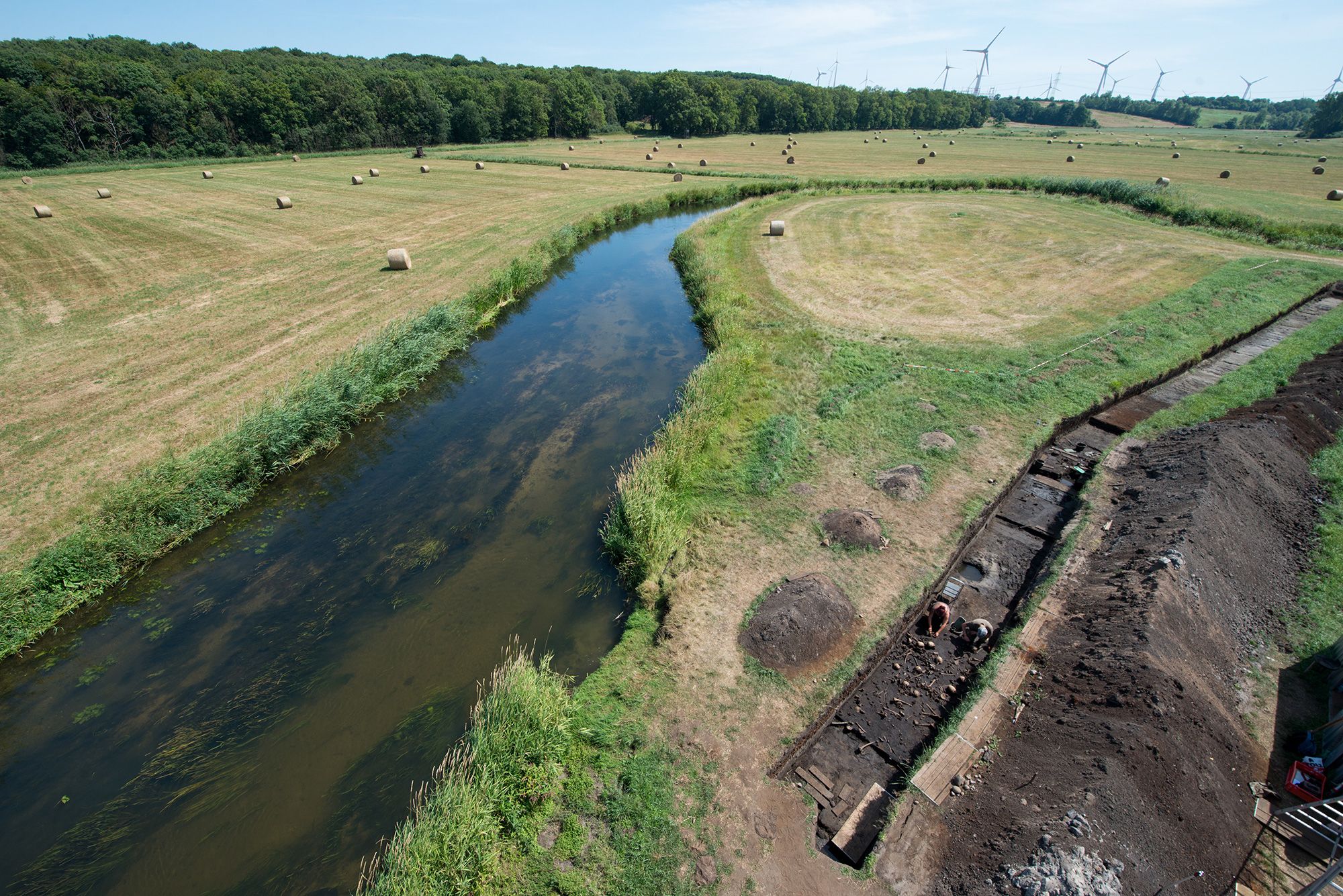
Archaeologists have uncovered a haunting trove of ancient human bones and weapons, shedding new light on one of the bloodiest battles in European prehistory. The site, located in northern Germany near the Tollense River, has provided evidence of a 3,250-year-old battle that left thousands dead, giving researchers a rare glimpse into the brutal realities of warfare during the Bronze Age.
The findings, which include thousands of skeletal remains and hundreds of bronze weapons, suggest a large-scale, organized conflict between opposing forces, offering a window into the social and military dynamics of early European societies.
A Battlefield Frozen in Time
First discovered in 1996, the Tollense River site has been the focus of extensive excavations over the past several decades, but recent discoveries have dramatically expanded archaeologists’ understanding of the battle. Researchers have unearthed more than 12,000 bones, including entire skeletons and severed limbs, many bearing the marks of violent injuries. Alongside these remains, hundreds of bronze and wooden weapons—including swords, spears, and arrowheads—have been found scattered across the site, some still lodged in human bones.
“The scale of the destruction is astonishing,” said Dr. Thomas Terberger, a leading archaeologist on the project. “The sheer number of bodies and weapons points to an immense and organized conflict, unlike anything we’ve seen from this period in Europe.”
The battlefield, which spans several square kilometers, appears to have been the site of a fierce confrontation between two large groups. The remains suggest that many of the combatants were young, able-bodied men, though some evidence points to the involvement of older individuals and even women. The dead were left where they fell, with no signs of formal burial, indicating that the battle likely ended in chaos and retreat.
A Violent Clash in the Bronze Age
The battle at Tollense is believed to have occurred around 1,250 BCE, during a time of significant social and technological change in Europe. The Bronze Age was marked by the development of metalworking, which allowed for the creation of advanced weapons and armor. The presence of bronze swords, daggers, and spearheads at the site suggests that this was a well-armed, organized force, possibly part of a larger military campaign.
Many of the bones show evidence of severe trauma, including shattered skulls, broken limbs, and deep cuts, likely caused by the bronze weapons. Some skeletons also bear the marks of arrows and spears, with projectiles still embedded in their bones.
“These injuries tell a story of hand-to-hand combat,” said Dr. Terberger. “The wounds are consistent with close-quarters fighting, and the damage to the bones suggests that this was an incredibly violent encounter.”
Who Were the Combatants?
One of the biggest mysteries surrounding the Tollense battlefield is the identity of the combatants. Archaeologists are still piecing together clues about who these people were and what sparked the conflict. Recent DNA analysis of some of the remains has revealed that the fighters were not a homogenous group but included individuals from diverse regions, including northern and central Europe.
This suggests that the battle may have been part of a larger migration or military campaign, possibly involving alliances between different tribes or kingdoms. Some researchers have speculated that the conflict could have been related to control over trade routes or resources, such as metal deposits, which were crucial for making weapons during the Bronze Age.
“The diversity of the fighters indicates that this was not just a local skirmish,” said Dr. Terberger. “It may have been a larger conflict involving multiple groups, perhaps even an early form of a coalition or alliance.”
The Tollense Valley: A Key Archaeological Site
The Tollense Valley has become one of the most important archaeological sites in Europe for understanding prehistoric warfare. The level of preservation at the site, due in part to the waterlogged conditions of the valley, has allowed researchers to recover a wealth of organic material, including wooden clubs, leather armor, and even remnants of clothing.
In addition to human remains, archaeologists have also discovered the bones of horses, suggesting that cavalry may have played a role in the battle. The discovery of horses is particularly significant, as it provides early evidence of mounted combat in Europe.
The finds at Tollense have transformed our understanding of Bronze Age societies, showing that large, organized conflicts occurred much earlier in European history than previously thought. The scale and intensity of the battle point to a level of political and military organization that was once considered impossible for this time period.
The Grisly Legacy of the Battle
For the people who fought and died in the Tollense Valley, the battle would have been a terrifying and bloody ordeal. The thousands of bones scattered across the site are a stark reminder of the human cost of ancient warfare. Many of the dead likely never returned home, and their families may have never known their fate.
Researchers continue to study the remains and artifacts from the site, hoping to uncover more details about the battle and the people who fought in it. As more evidence emerges, the Tollense battlefield offers a rare and gruesome glimpse into the violence and chaos that shaped early European history.
Sources:
- Statements and reports from archaeologists at the Tollense River site
- DNA analysis of skeletal remains
- Research papers on Bronze Age warfare and archaeology in Europe