The ‘World’s Largest’ Vacuum to Suck Climate Pollution Out of the Air Just Opened
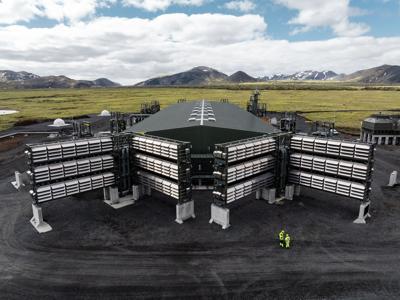
The ‘World’s Largest’ Vacuum to Suck Climate Pollution Out of the Air Just Opened
In a groundbreaking effort to combat climate change, the world’s largest direct air capture (DAC) facility—essentially a giant vacuum designed to suck carbon dioxide (CO2) out of the air—has officially opened. Located in Iceland, this innovative plant aims to remove millions of tons of CO2 from the atmosphere, offering a potential solution to reducing the impact of greenhouse gases and slowing global warming.
A Milestone in Carbon Capture Technology
Named “Orca,” after the Icelandic word for “energy,” the facility is the product of Swiss company Climeworks in partnership with Carbfix, an Icelandic carbon storage firm. The DAC plant is designed to capture approximately 4,000 metric tons of CO2 per year—equivalent to the emissions produced by around 870 cars annually. Though this is only a fraction of global emissions, the plant represents a significant milestone in the field of carbon capture and storage (CCS) technology.
Orca operates using large fans that pull air into the system, where the CO2 is chemically separated and collected. Once captured, the CO2 is mixed with water and injected deep underground into basalt rock formations, where it mineralizes over time, effectively turning into stone and permanently trapping the carbon.
The Urgent Need for Carbon Removal
While global efforts to reduce emissions focus on transitioning to renewable energy, improving energy efficiency, and reducing consumption, many climate scientists argue that these measures alone may not be enough to meet the targets set in the Paris Agreement. To limit global temperature rise to 1.5°C above pre-industrial levels, the world must not only slash current emissions but also remove excess CO2 already in the atmosphere.
Direct air capture technology is emerging as one of the most promising tools to achieve these goals. By directly removing CO2 from the air, DAC facilities like Orca could help reverse some of the damage already done to the climate, especially in industries where reducing emissions is difficult, such as aviation, heavy manufacturing, and agriculture.
A Vision for Scaling Up
While Orca is a breakthrough in climate technology, experts acknowledge that its current capacity is small relative to the scale of the climate crisis. Global CO2 emissions amount to around 40 billion metric tons annually, and achieving meaningful reductions would require a dramatic scaling up of DAC technology.
Climeworks has ambitious plans to expand the scope of carbon capture, aiming to build larger plants capable of capturing hundreds of thousands or even millions of metric tons of CO2 per year. However, scaling the technology presents significant challenges, including the high cost of DAC systems, the energy required to run them, and the need for infrastructure to store or reuse captured carbon.
At present, the cost of capturing one ton of CO2 with DAC technology is estimated to be between $500 and $1,000. As the technology develops and gains more investment, it is hoped that these costs will decrease, making carbon removal more accessible on a global scale.
Carbon Capture in the Fight Against Climate Change
Orca is part of a larger movement toward carbon capture and storage solutions that include not only direct air capture but also carbon capture at the source (such as power plants and industrial facilities) and nature-based solutions like reforestation. The Intergovernmental Panel on Climate Change (IPCC) has emphasized that achieving net-zero emissions will likely require a combination of these approaches.
However, carbon removal is not a replacement for reducing emissions, and many environmental advocates caution that relying too heavily on DAC technology could distract from the urgent need to cut fossil fuel use. Carbon capture technologies are a powerful tool, but they must be part of a broader strategy that includes sustainable energy transitions and more efficient consumption patterns.
Hope for the Future
The opening of Orca offers a glimpse of what might be possible in the fight against climate change. While challenges remain in scaling up and making the technology cost-effective, the facility represents a bold step toward a future where humanity can not only prevent further damage to the climate but actively begin to repair the harm that has already been done.
As the world’s largest vacuum for climate pollution, Orca is both a symbol of innovation and a call to action—a reminder that addressing the climate crisis will require every tool at our disposal, from renewable energy and conservation to pioneering technologies like direct air capture.