Tiny Rainforest Lizards Leap into Water and Don’t Surface When Expected: Scientists Now Know Why
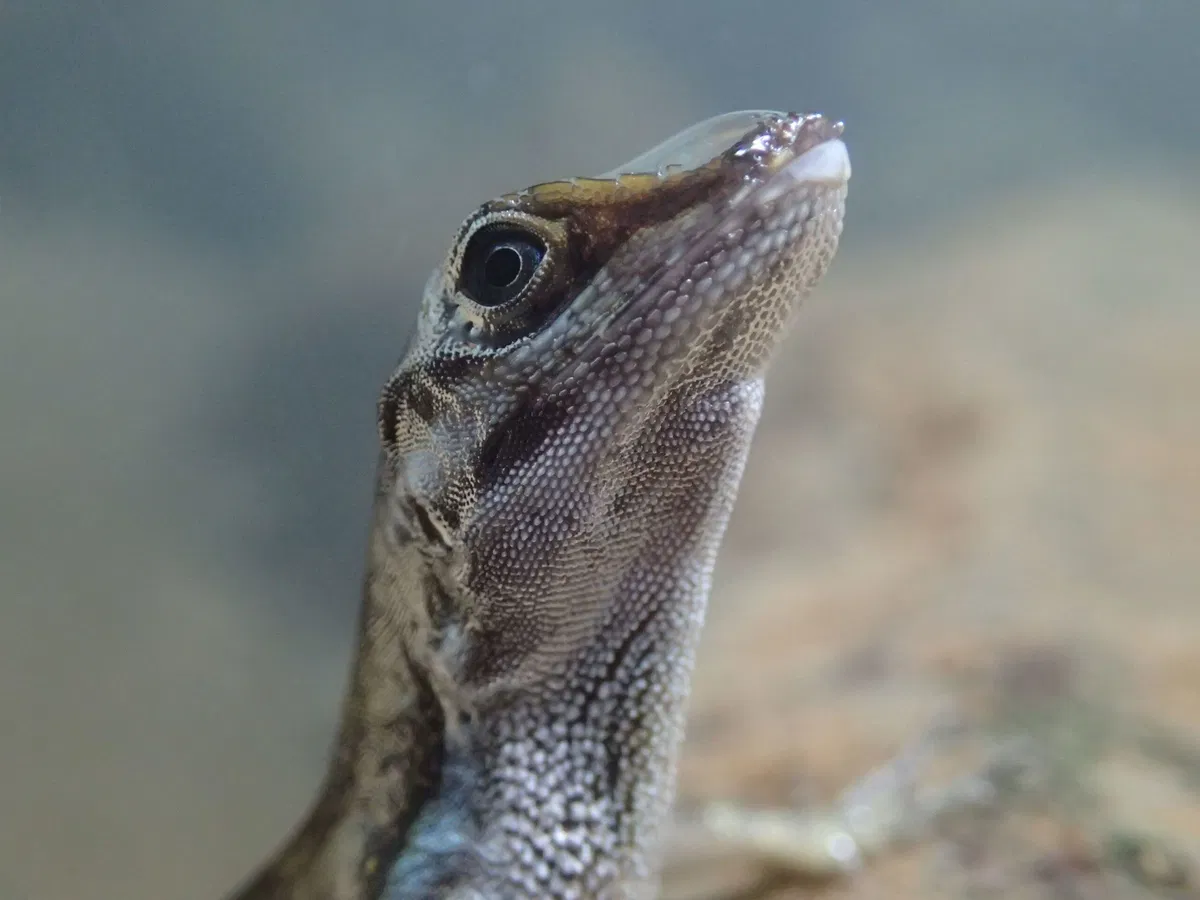
Deep in the tropical rainforests of Central and South America, tiny lizards known as Anolis have puzzled scientists with an unusual behavior. When threatened by predators, these small creatures often leap into streams or pools of water—but instead of quickly resurfacing to breathe, they remain submerged far longer than expected. For years, this curious survival tactic stumped researchers, but recent studies have finally uncovered the secret behind the lizards’ remarkable underwater endurance.
The Mystery of the Submerged Lizards
Anolis lizards, sometimes called anoles, are a diverse group of reptiles that live in rainforests throughout the Americas. Known for their agility and rapid movements, these lizards are often seen scurrying through the dense undergrowth or darting between branches to avoid predators like birds, snakes, or larger mammals.
When evading danger, some species take an unexpected plunge into water. However, instead of resurfacing immediately, they stay submerged for up to 18 minutes—a surprising feat for a reptile that typically relies on air for respiration. The ability to stay underwater for such long periods raised questions among biologists about how these small creatures could survive without access to oxygen.
How Do They Do It?
A team of scientists from the University of Toronto, led by biologist Luke Mahler, set out to solve this mystery. In a series of experiments conducted in the rainforests of Costa Rica, researchers closely observed several species of Anolis lizards as they submerged themselves in water. The breakthrough came when the team noticed an unusual feature on the lizards’ skin: tiny bubbles clinging to the surface of their bodies.
Using specialized high-speed cameras and underwater sensors, the researchers discovered that the lizards were able to “rebreathe” oxygen trapped in these bubbles, much like divers using a rebreather system. This process, known as cutaneous respiration, allows the lizards to extract oxygen from the bubbles while underwater, significantly extending the time they can remain submerged.
“The bubbles form a thin layer over the lizards’ skin, effectively acting as an oxygen reservoir,” Mahler explained. “It’s almost like they’re carrying a portable air supply with them, allowing them to stay hidden underwater for longer than we thought possible.”
An Evolutionary Survival Strategy
This remarkable adaptation likely evolved as a survival strategy in response to the high predation pressure faced by Anolis lizards in their rainforest habitats. By diving into water and staying submerged for extended periods, the lizards can evade predators that are waiting for them to resurface. The ability to hide underwater for so long gives them a significant advantage in the wild.
Scientists believe this “rebreathing” technique is similar to that used by certain insects, like water beetles, which also trap air bubbles on their bodies to breathe underwater. However, the discovery of this behavior in reptiles is particularly exciting, as it reveals an unexpected level of adaptability in these tiny creatures.
“This ability to stay underwater is a game-changer for their survival,” Mahler said. “It’s a clear example of how species can develop unique adaptations in response to environmental pressures.”
Broader Implications for Understanding Reptile Adaptations
The discovery of this underwater survival tactic in Anolis lizards sheds light on the wide range of adaptive behaviors seen in reptiles and other animals. It also opens the door for further research into how other species might use similar mechanisms to survive in challenging environments.
In the case of the Anolis lizards, their underwater endurance highlights how even small, seemingly vulnerable creatures can develop complex methods of survival. The findings have also generated excitement in the scientific community about the possibility of uncovering more examples of previously unknown adaptations in other species.
“This discovery reminds us that there’s still so much we don’t know about the natural world,” Mahler said. “It’s fascinating to think about what other animals might be doing under our noses—or in this case, under the water—without us realizing it.”
Conclusion
The mystery of why tiny rainforest lizards could stay underwater for so long has been solved, and the answer is both simple and ingenious. By trapping air bubbles on their skin and “rebreathing” underwater, these Anolis lizards have found a clever way to outwit predators and survive in their treacherous rainforest homes. This remarkable adaptation not only enhances our understanding of these fascinating creatures but also highlights the incredible diversity of life’s survival strategies in nature.